

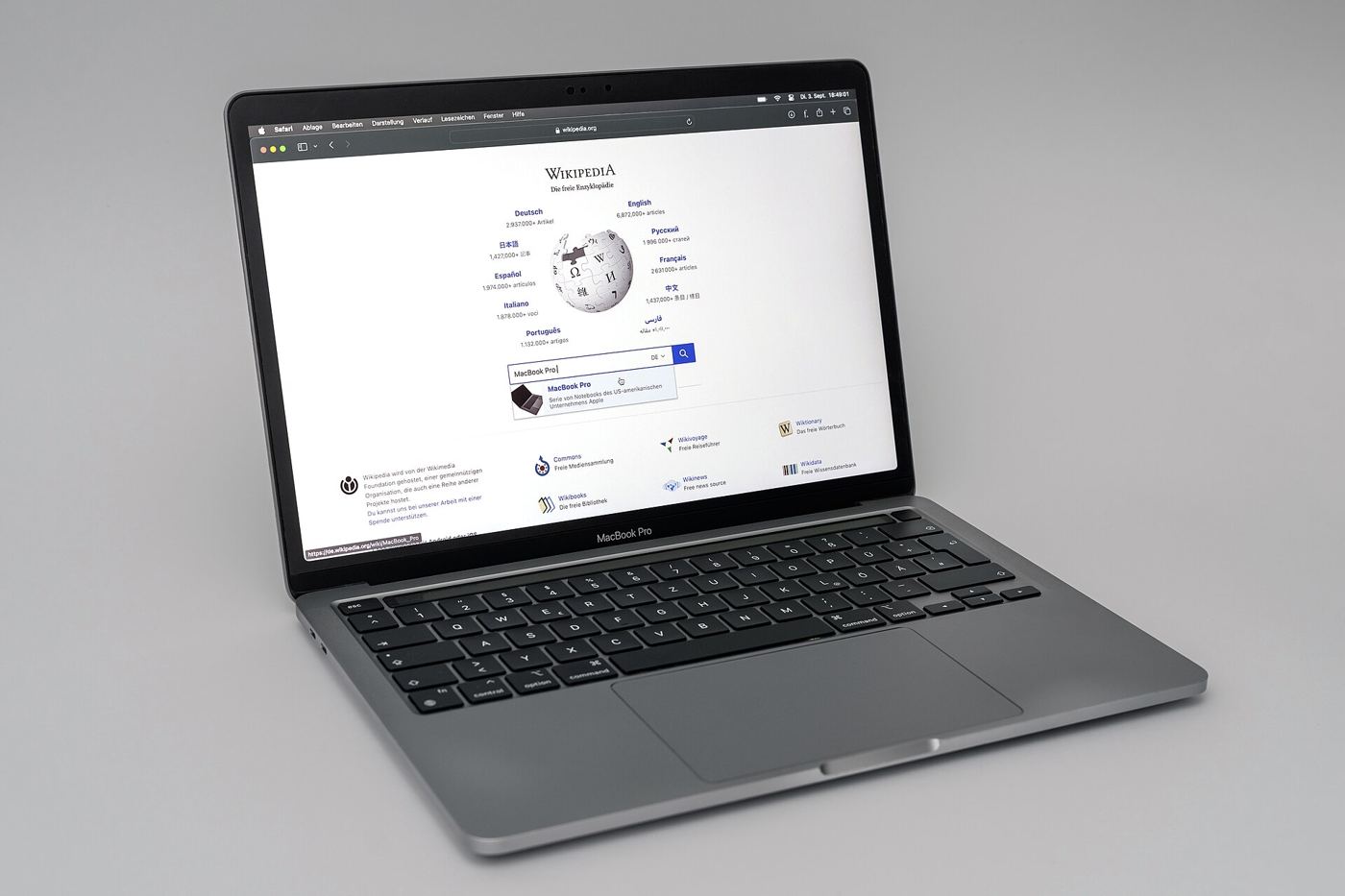
Apple has launched its first MacBook Pro with a touchscreen, ending a position the company held for nearly two decades. The new 14-inch and 16-inch MacBook Pro models with OLED touchscreens went on sale on 6 November 2026, alongside an OLED iPad mini, a new iMac and a standard 14-inch MacBook Pro, in a five-product launch. The touchscreen models start at 2,899 dollars for the 14-inch version and 3,399 dollars for the 16-inch version, and they run on the M5 Pro or M5 Max chips rather than the newer M6. Their screens use PROLED XDR display technology, and the machines run macOS 27 with touch features built into the system. Apple executives had argued for years that a touchscreen belonged on the iPad and not on the Mac, so the launch marks a sharp change of direction. The standard 14-inch MacBook Pro with the M6 chip starts at 1,999 dollars, while the OLED iPad mini with the A20 Pro chip starts at 699 dollars.
What the Evidence Shows
The decision to add touch to the Mac is a response to how people actually use their computers, and to pressure from rivals. Windows laptops have offered touchscreens for years, and many buyers expect to tap a screen as naturally as they tap a phone. Apple is betting that a Mac can keep its keyboard and trackpad while gaining touch as an extra way to work, rather than replacing the pointer entirely. The high prices show that Apple sees the touchscreen models as premium machines for professionals, not as a replacement for the standard MacBook Pro. Early buyers will test whether touch controls feel natural in desktop software, or whether reaching across the keyboard to tap a screen grows tiring over a working day. If the experiment succeeds, touch could spread across the Mac range in the years ahead. Reporting and analysis from sources such as Wired track the same developments, and specialists following Apple’s first touchscreen MacBook Pro say the direction is now consistent across independent lines of evidence.
The Wider Context
The wider context is an industry learning to ship capability and restraint together. Products built around Apple’s first touchscreen MacBook Pro now launch with safety evaluations, usage data and rollback plans as standard, because enterprise buyers and regulators ask for them in the first meeting. Companies that treated those questions as friction are discovering they have become the purchase criteria.
What Happens Next
What happens next for Apple’s first touchscreen MacBook Pro depends less on another breakthrough than on the unglamorous work of reliability, pricing and support. The buyers evaluating it now are not enthusiasts; they are operators with budgets and auditors, and their checklists will decide the timeline. On the evidence of the current pilots, the technology has earned the right to be judged by them. You can follow related developments in our coverage of technology.
None of this will be settled by a single announcement, study or product launch. The pattern to watch is accumulation: independent confirmations, honest reporting of failures and steady improvement in the underlying numbers. Readers who follow those signals, rather than the loudest claim of the week, will understand this subject better than most of the commentary surrounding it suggests is possible.
